


In real estate development, the term “high-end” is used almost instinctively. It signals quality, exclusivity, and premium value long before a project is completed. Developers, investors, and brands rely on this label to position their projects as superior within competitive markets.
Yet before a project exists physically, high-end remains an abstract promise. There are no materials to touch, no spaces to walk through, no atmosphere to experience. This raises an important question for modern real estate teams: how is a sense of “high-end” defined visually before a project becomes real?
This is where high-end architectural visualization becomes critical. It is not simply about making a project look impressive. It is about translating ambition into something that can be seen, understood, and evaluated. Through visualization, the idea of high-end moves from a descriptive word into a tangible visual experience that stakeholders can respond to with confidence.
At CAV Studio, we work alongside teams developing premium real estate projects to reveal this visual clarity early. By combining high-end architectural visualization and high-end 3D rendering, design intent, brand positioning, and experiential quality are brought into focus, allowing projects to express their highest value long before construction begins.
.jpg)
Why “High-End” Visualization is often misunderstood
High-end visualization is frequently misunderstood as a matter of visual polish. Higher resolution, richer materials, dramatic lighting, or cinematic compositions are often assumed to be the defining factors. While these elements contribute to visual quality, they do not determine whether visualization is truly high-end.
In modern real estate development, visualization exists to support understanding across diverse stakeholders. Developers, investors, consultants, and marketing teams rely on visual material not just to admire a project, but to interpret intent, assess feasibility, and align expectations. When visualization focuses only on aesthetics, it may look refined while still leaving critical questions unanswered.
High-end visualization begins where surface-level beauty ends. It addresses the gap between how a project is designed and how it is perceived by those responsible for approving, funding, and delivering it.
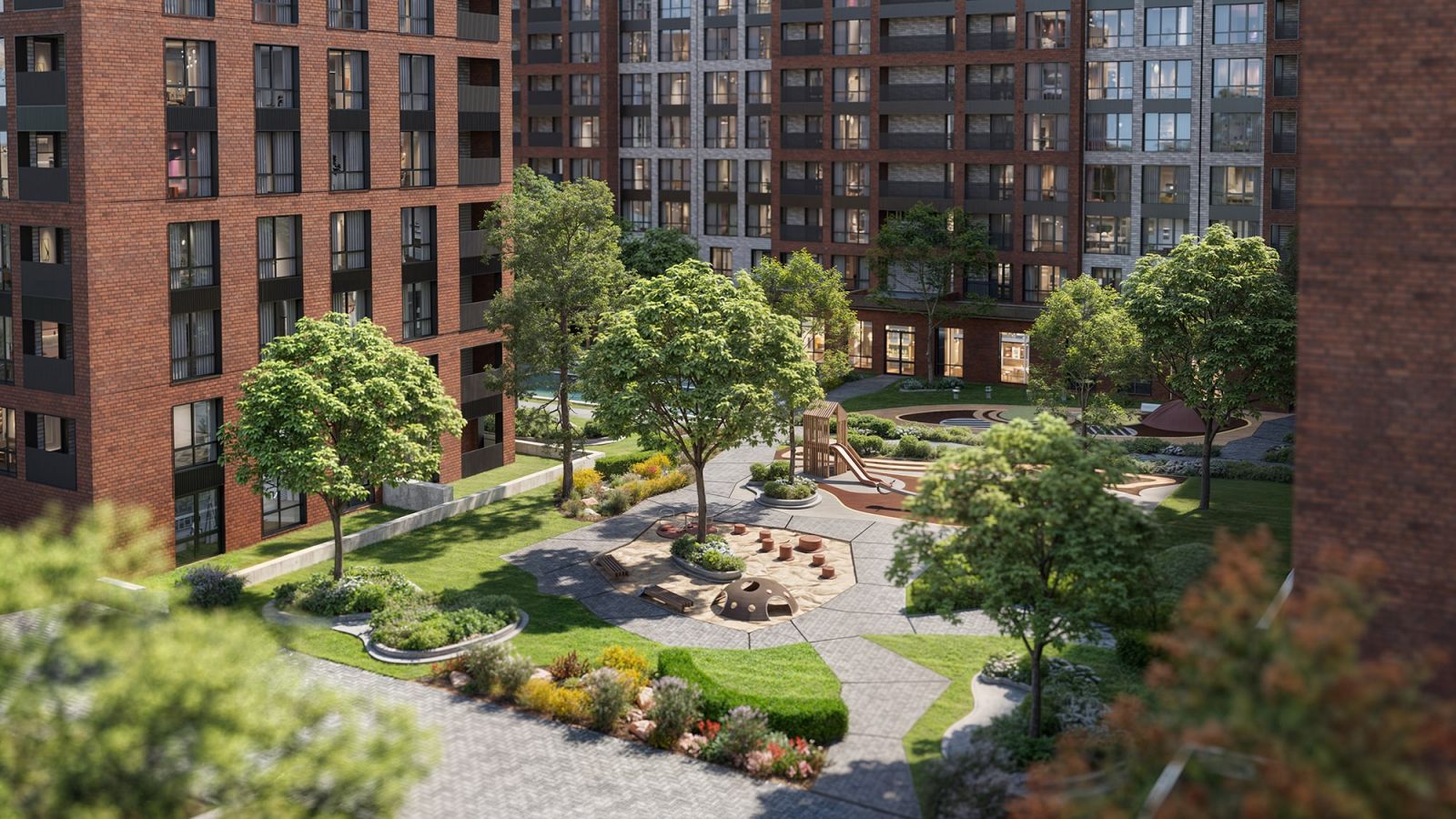
High-End Visualization begins with design intent and project understanding
At the core of high-end visualization is a deep understanding of design intent and project objectives. Before any image is produced, visualization must respond to why the space exists, who it is designed for, and what decisions it needs to support.
In modern real estate projects, visualization is most effective when it functions as an extension of the design process rather than a post-design embellishment. This requires interpreting architectural concepts accurately and translating them into visuals that communicate spatial logic, hierarchy, and experience without distortion.
When visualization aligns closely with design intent, it becomes a reliable reference point rather than an interpretation open to debate. This is where visualization evolves into a strategic layer, preserving design integrity while making complex ideas accessible to non-technical stakeholders.
.jpg)
Clarity and alignment: What separates High-End from standard visualization
One of the clearest distinctions between standard visualization and high-end architectural visualization lies in its ability to create alignment. Real estate projects involve multiple stakeholders with different priorities: financial, technical, operational, and branding-related. Without a shared visual reference, each party forms its own interpretation of the project.
High-end visualization establishes a common visual language. It allows all stakeholders to evaluate the same spatial reality rather than rely on assumptions derived from drawings or descriptions. This clarity reduces friction during reviews, accelerates approvals, and minimizes the risk of misalignment as the project progresses.
Instead of reacting to misunderstandings later, teams can address key questions earlier, when flexibility still exists. In this role, visualization becomes a tool for coordination and decision-making rather than a passive communication asset.
.jpg)
Reducing risk and improving decisions in modern real estate development
As real estate development grows more complex, the cost of late-stage changes continues to rise. Many of these changes are not caused by flawed design, but by decisions made without sufficient clarity early on.
High-end visualization helps reduce this risk by allowing teams to evaluate outcomes before they are built. Through high-end 3D rendering, spatial conflicts, circulation challenges, scale issues, or experiential shortcomings can be identified visually long before they translate into construction delays or budget overruns.
By improving decision quality at earlier stages, visualization supports more predictable timelines and outcomes. In modern real estate development, this ability to reduce uncertainty is one of the most valuable characteristics of high-end visualization.
.jpg)
High-End Visualization as the first expression of the brand
In today’s market, architecture and branding are inseparable. Commercial spaces communicate corporate identity, hospitality environments shape guest experience, and residential developments express lifestyle positioning. Long before a project opens, its brand is already being formed through visual communication.
High-end visualization often becomes the first moment where this brand is experienced. It defines how a project feels before it exists, setting expectations for quality, atmosphere, and intent. Rather than simply illustrating design, visualization establishes perception- often before marketing campaigns begin or physical spaces are delivered.
When executed strategically, visualization ensures that brand positioning is not retrofitted later, but embedded from the earliest stages. This alignment allows marketing narratives, investor messaging, and user expectations to grow from the same visual foundation, strengthening credibility and market confidence.
.jpg)
Conclusion – High-End visualization as a strategic capability
In modern real estate development, high-end visualization is not defined by visual sophistication alone. It is defined by its ability to support understanding, alignment, and confident decision-making across complex projects.
Rather than serving as a final presentation layer, high-end visualization functions as a strategic capability-one that reduces uncertainty, protects design intent, and strengthens outcomes from concept through execution. As projects grow in scale and expectation, this role becomes increasingly critical.
At CAV Studio, high-end architectural visualization and high-end 3D rendering are approached as disciplined processes rather than standalone deliverables. By integrating visualization early and strategically, real estate teams are able to move forward with greater clarity, stronger alignment, and decisions grounded in shared understanding rather than assumptions.
Email: canhphan@cavarchitecture.com
WhatsApp: +84 905790968


