


The hidden inefficiency inside every visualization workflow
In architectural visualization, most discussions focus on rendering quality, lighting, or composition. However, one of the most common inefficiencies happens much earlier- during asset search.
If you are a 3D artist, you have likely experienced this:
A client requests a specific model, and instead of building the scene, you spend time searching through folders to find it.
Sometimes it takes a few minutes.
Other times, it takes much longer- especially when dealing with older assets or unclear file structures.
This is why integrating the right tool into the workflow becomes necessary to eliminate this inefficiency.
At CAV Studio, this was not an isolated issue. As projects scaled and the internal library expanded, model search gradually became a recurring friction point within the 3D workflow for architectural visualization.
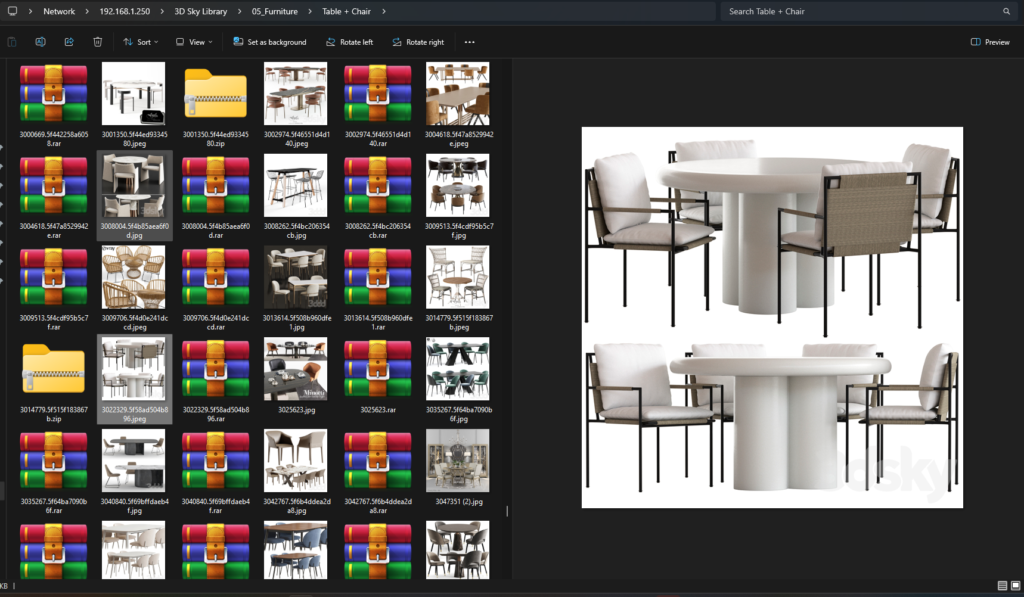
The real issue: not searching, but managing assets
On an individual level, spending 30-60 minutes searching for a model may seem acceptable. But in a team environment, the impact multiplies quickly.
If a team of 10 artists faces the same issue, the studio may lose:
-
5 to 10 working hours per day
-
purely on locating assets
At CAV Studio, this translated into:
-
slower scene setup
-
inconsistent asset usage
-
reduced time for creative refinement
This reveals a deeper issue:
The problem is not “finding files” it is the lack of a structured 3D asset management process within the workflow.
Most studios rely on folder systems and naming conventions. But as the asset library grows, these systems become harder to navigate.
Artists cannot remember everything.
New team members struggle to adapt.
And over time, searching becomes guesswork.
At that point, the studio is no longer managing assets- it is simply storing them.
When workflow breaks, production quality is affected
Time spent searching directly reduces time spent on:
-
lighting and atmosphere
-
composition
-
material refinement
At CAV Studio, this imbalance became clear across multiple projects. The more time artists spent navigating assets, the less time they had to improve the final output.
The consequences are practical:
-
productivity decreases
-
deadlines become tighter
-
revisions increase
-
client confidence is affected
This is how a small inefficiency evolves into a bottleneck within the architectural visualization workflow.
Why folder-based systems do not scale
Many studios attempt to solve this problem by improving organization:
-
stricter naming conventions
-
deeper folder structures
-
manual categorization
However, these solutions share the same limitation: They rely on human memory.
At CAV Studio, after years of working with large-scale projects and accumulating thousands of assets, it became clear that no folder structure could scale effectively.
The issue was not organization- it was accessibility within the workflow.
Rethinking the workflow: from storage to instant search
To improve the 3D workflow for architectural visualization, the problem needed to be redefined.
Instead of asking:
-
“Where should assets be stored?”
The question became:
-
“How can any artist find the right model instantly, regardless of storage location?”
This shift led to a different approach- one that focuses on search, not storage.
CC Workspace Extension: integrating model search into the workflow
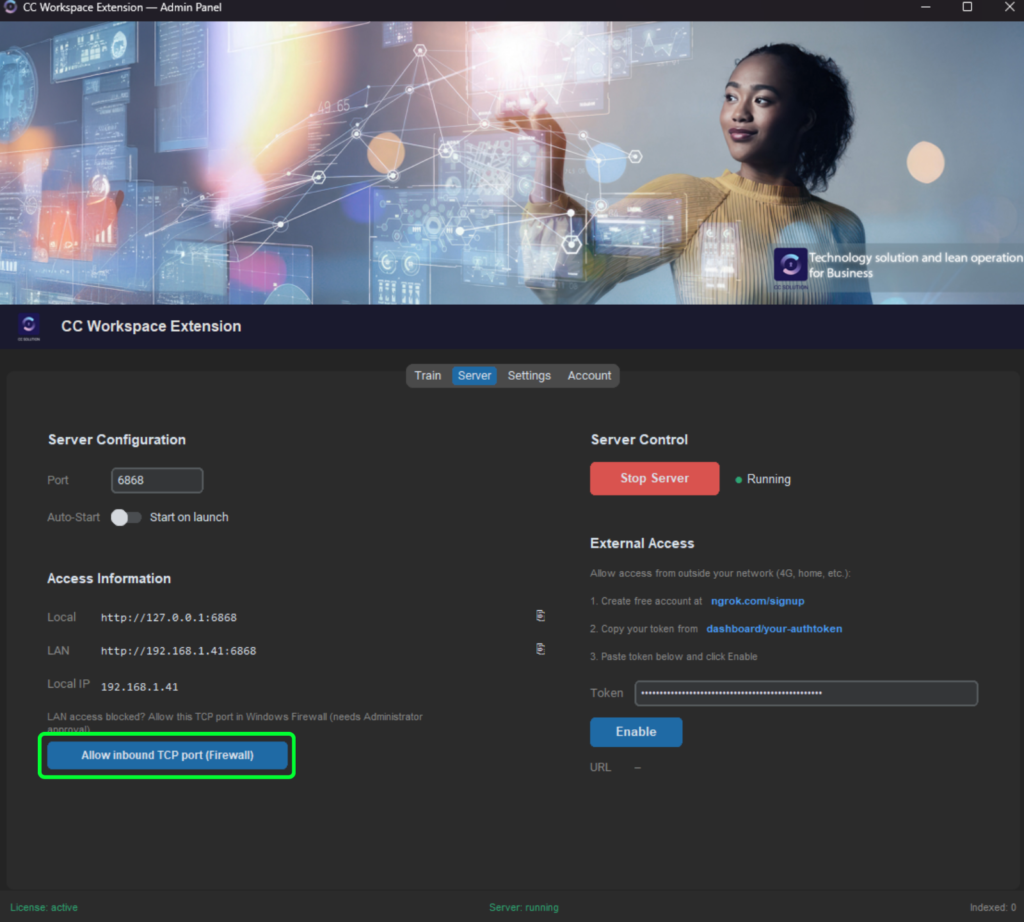
To address this, CAV Studio integrated CC Workspace Extension into its production pipeline.
Rather than treating asset search as a separate step, the tool brings it directly into the working environment.
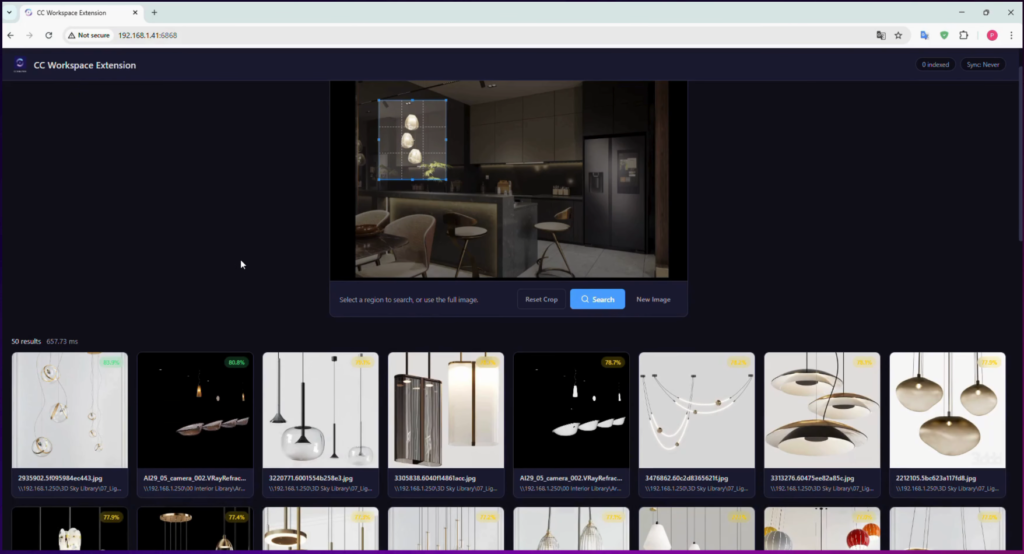
Artists can:
-
use a reference image
-
let the system analyze visual similarities
-
retrieve matching models within seconds
.png)
Powered by AI- based vector analysis, the system:
-
identifies models with high accuracy
-
groups results by type and characteristics
-
significantly reduces search time
.png)
At CAV Studio, this improves workflow in a measurable way:
-
faster scene setup
-
more consistent asset usage
-
reduced dependency on senior team members
Download here: https://canhphun.gumroad.com/l/ccworkspace-extension
From tool to workflow standardization
The impact of CC Workspace Extension goes beyond speed.
It changes how decisions are made during production.
Instead of asking:
-
“Do we have this model?”
-
“Where is it stored?”
Artists can quickly determine:
-
whether an asset already exists
-
whether a new asset is needed
This reduces hesitation and keeps the workflow moving.
At CAV Studio, this helps standardize the 3D workflow for architectural visualization across teams:
-
less reliance on individual memory
-
easier onboarding for new artists
-
more consistent output across projects
Improving efficiency without affecting creativity
Workflow optimization is not about working faster- it is about removing unnecessary steps.
By reducing time spent on repetitive tasks, artists can focus on:
-
design quality
-
visual consistency
-
project refinement
At CAV Studio, this shift allows the team to allocate more time to creative work, rather than operational tasks.
What this means for project delivery
From a production perspective, improving model search leads to:
-
reduced wasted time
-
faster scene development
-
more predictable timelines
From a client perspective, the benefits are clear:
-
consistent visual quality
-
fewer delays
-
more reliable delivery
This is where workflow improvement translates into real business value.
Conclusion: workflow defines performance
In architectural visualization, inefficiencies rarely come from major technical limitations. They come from small, repeated disruptions within the workflow.
Model search is one of those disruptions.
At CAV Studio, solving this issue required more than better organization. It required integrating search directly into the workflow through tools like CC Workspace Extension.
The result is a more structured, scalable, and professional 3D workflow for architectural visualization- where artists spend less time searching and more time creating.
Contact us to explore more
If you're looking to improve your 3D workflow for architectural visualization or manage large asset libraries more efficiently, CAV Studio can support you with a structured and practical approach.
Contact us to explore how workflow optimization can improve both production performance and project delivery.
Email: canhphan@cavarchitecture.com


